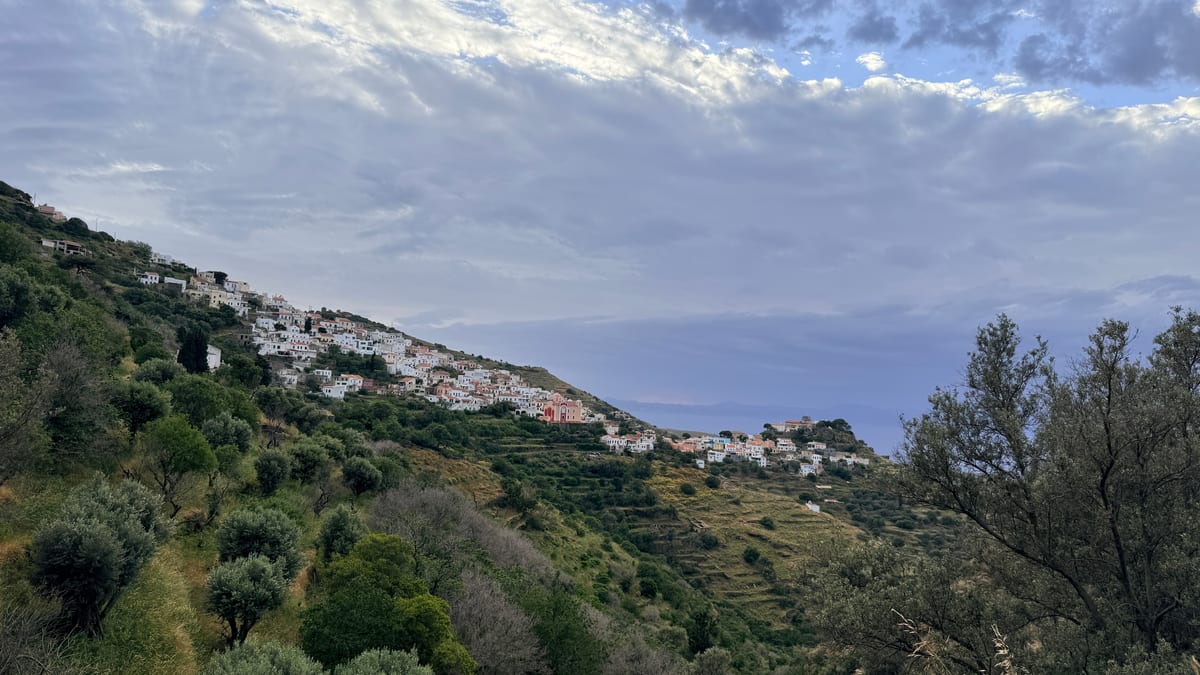
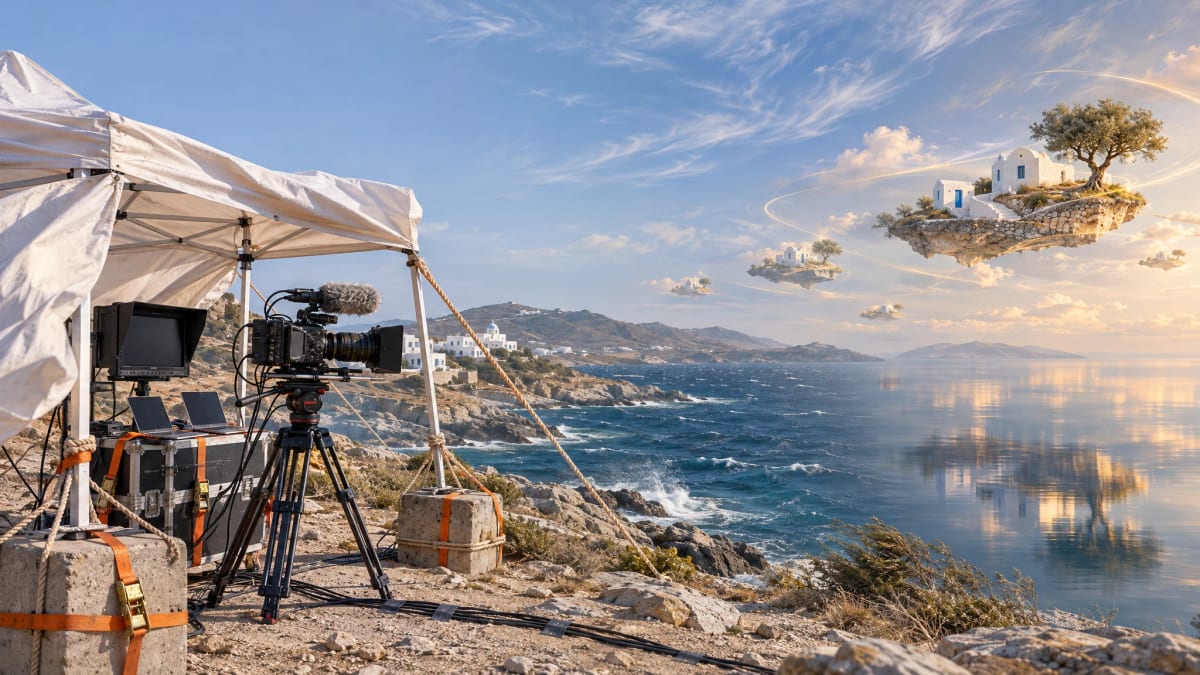
The wind on Kea island was over 6 Beaufort, and we were covering an event outdoors, under a tent. Nobody had to panic, because Konstantinos, our director of photography, had expected it weeks before. Ropes went around concrete bases, the laptops and the TV monitor were strapped down, and the microphones got wind protection. The client was satisfied, even though it turned out to be a very bad experience afterwards.
I start with Kea because it shows what a filmed shoot really is: most of the work happens before anyone presses record, and nobody sees it. AI video has its own version of that unseen work. So the choice is less about which one is better and more about what your project needs on screen. If real people, a real place or a live moment is the product, you film it. If what you need doesn’t exist in front of a camera yet, AI is often the cheaper and faster way to get it. Most projects fall clearly on one side, and the rest are worth a proper conversation. Here is how I tell them apart, from someone who does both.
Cost and time, side by side
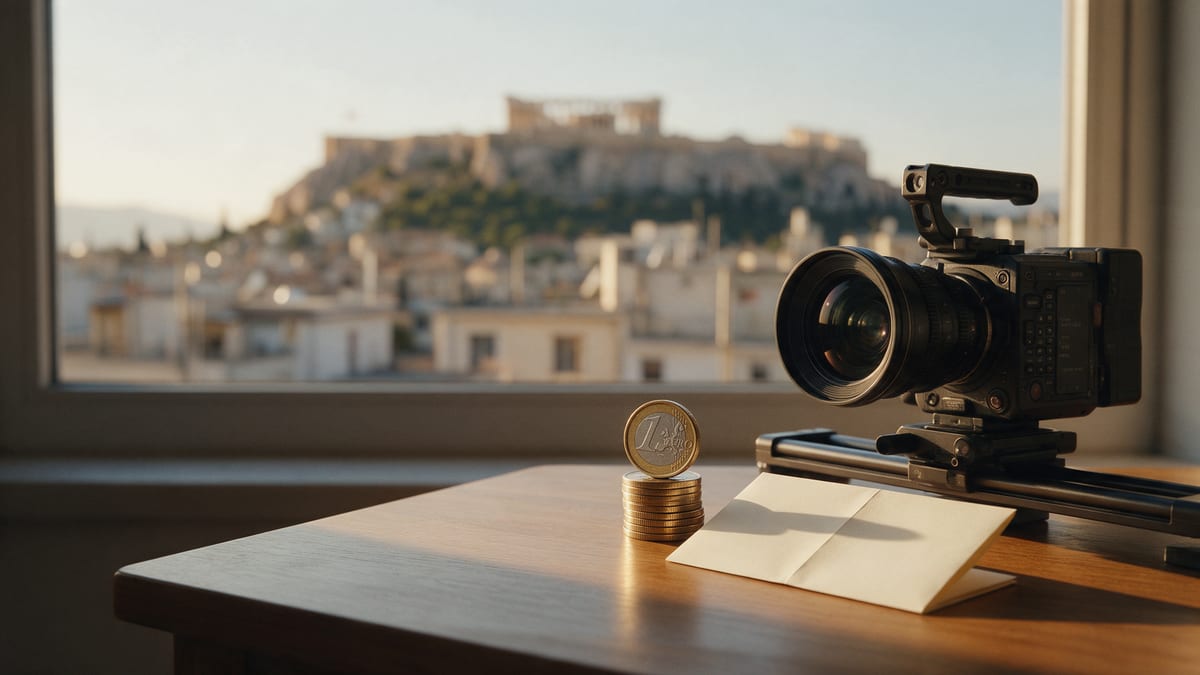
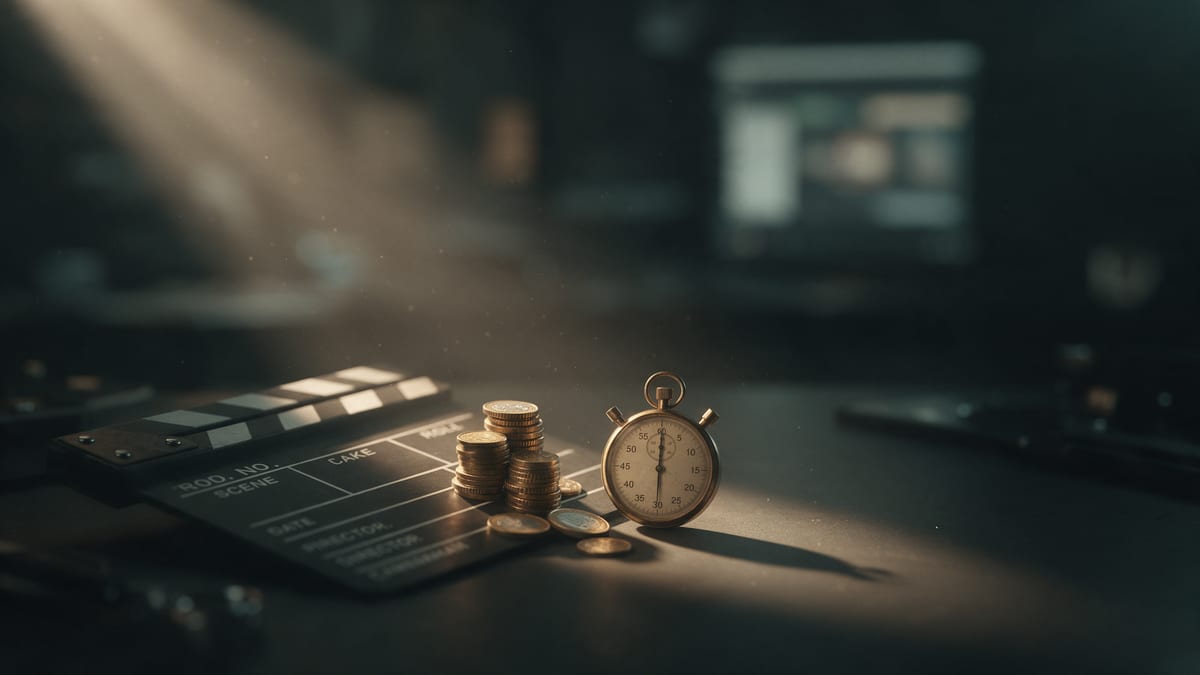
On cost, AI video usually lands between €150 and €1,500 for most small projects. A corporate filmed video usually sits between €1,000 and €5,000. Those are the ranges I publish, and the AI video cost calculator will give you a closer number for your own idea.
On time, AI is days and a filmed production can be weeks. A film shoot needs planning, crew, locations, a shoot day (or several) and an edit. AI skips most of that, but not all of it, and I’ll come back to why. The planning moves into the idea itself: what exactly you want to see, and how to describe it clearly enough that a model can give it to you.
The difference that matters more than the numbers is how you spend the money. A shoot is more controlled: with a professional crew you pay more, and in return you usually know what the end result will look like. AI is more experimental. You can keep trying at a fraction of the cost, and reach things that wouldn’t be possible on a low budget.
A shoot is more controlled. AI is more experimental, and it can reach what a low budget could never film.
What AI video does well
AI is on its own a great fit for ideas that are hard or expensive to put in front of a lens. These are the jobs I’m happy to take on with it:
- Concepts and products, where the hero is an object or an idea
- Explainers
- Social media ads (for short social videos you can also order directly from the social video service)
- Stylised or impossible scenes (try filming those with a crew)
- Turning your own photos into moving video
- Previsualising a script before a shoot
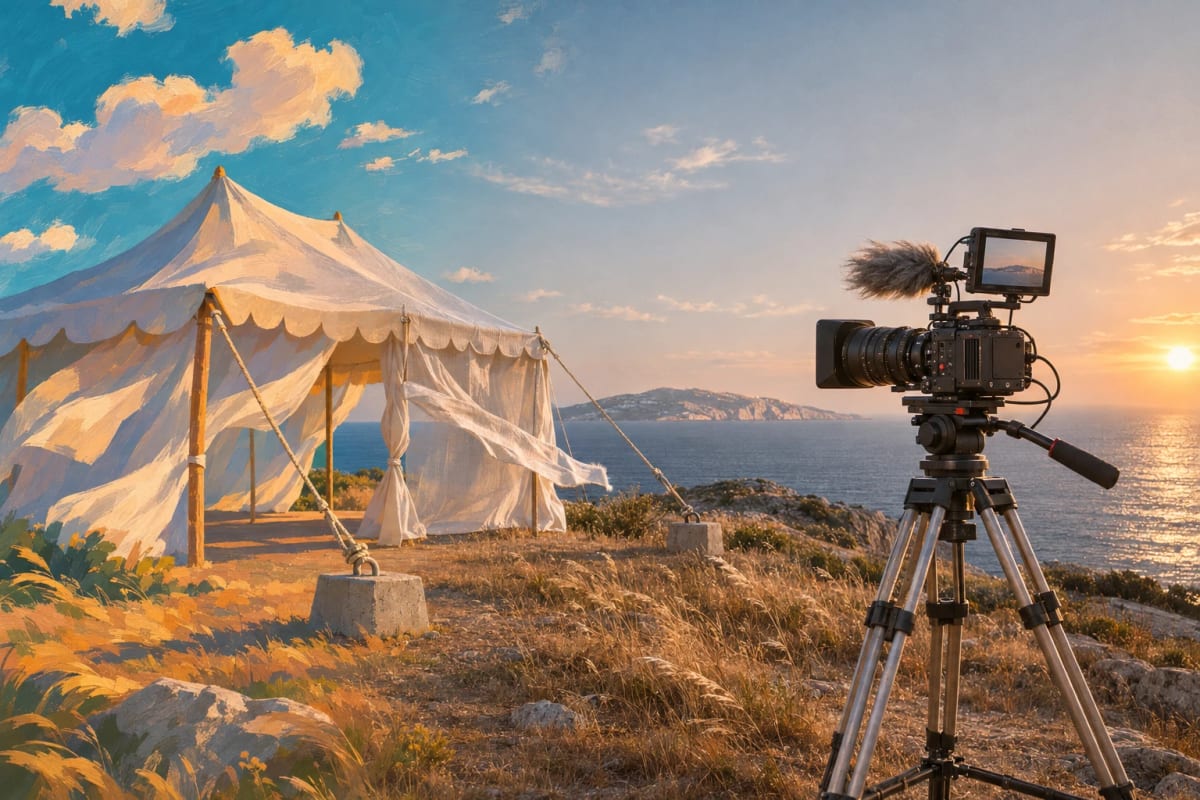
Three years ago, most of this was out of reach. What is possible right now is day and night compared to then, and it is completely different from even a year ago. I talk about this with friends all the time, and the pace still surprises me.
What AI cannot replace
Real people and real places. Testimonials, interviews, documentary, events. If the viewer has to believe that this person said this, in this room, nothing generated will do the job. Live event coverage in particular can’t be swapped for AI, so for now these are two completely different products.
And a real shoot has its own problems, which is the other half of the Kea story. Equipment breaks. Someone is late. The person on camera can’t deliver the lines. There is noise and you can’t record clean sound. On Kea the wind made sound difficult, so we used wind protection to cut its effect, and everything that could fall (laptops, the TV monitor) was strapped down. Many small details like these are invisible to a bystander, and to the client too, but they are the reason the final result is top standard. It all comes down to how flexible you are as a production and what you can do to minimise the damage.
You don't get wind problems with AI video. You get different problems.
Where AI video still falls short
Most people have seen AI video as memes on social media, and there is a lot of AI slop going around. When you have a brand, you need to be certain the result is professional and won’t hurt it, and that is why not many businesses are ready to experiment yet. I understand that, and I think it’s right to be careful.
The honest part: today there are plenty of cases where AI video falls short of what you had in mind. It depends on how elaborate the scene is, how complicated the result looks, and whether characters are involved at all. Some things work almost straight out of the box. Cinematic work is where it gets tricky. It takes more time, more experiments, and enough knowledge to guide the models the way you would direct a film on a set.
The hardest part is consistency. Faces and locations drift between shots. I learned this on a short-film scene pre-visualisation for a client who wanted to see his script on screen before shooting it (he prefers to stay private, so that’s all I’ll say about him). It was a challenge, but always a learning process. My fix is not one trick. It is a loop:
- Try again.
- Make some rules.
- Follow those rules.
- See what works.
- Change the prompt.
- Change the process.
- Change the approach.
Eventually you have a blueprint. In practice that blueprint starts with characters and locations built as reference sheets first, so faces and look stay the same. It is also the main cost driver for longer AI films, and for a series you lock the look on the first video. This is why I tell clients to put a good amount of budget into AI credits. If you have no limit on experiments and retries, you will eventually get the result you want and even better. Most budgets have a limit, and that is the real conversation with a client: what can be achieved, what the limits are, and how that fits their vision and the kind of project. So the second thing you need is a clear idea of what you’re making, and a clear way to say it.
When a mix of both makes sense
I haven’t yet delivered a project that combines AI and filmed footage in one piece. What I can say is where I would use each, and the previs job above is the nearest example, since AI stood in for a shoot that hadn’t happened yet.
- AI previs before a real shoot. You see the script, the framing and the pacing before paying a crew to find out.
- AI scenes inside a filmed edit. The people and places stay real, and the shot that would be impossible or too expensive on location comes from AI.
The idea is simple: film what has to be real, generate what can’t be filmed, and be upfront with the audience about which is which. Both halves also depend on the same thing, a clear plan made before anyone presses a button. Whether the budget goes to a crew day or to AI credits, it is cheaper to decide the look and the story first and pay for fewer surprises later.
A checklist before you decide
Answer these six questions and the choice is usually obvious:
- Goal: do you need people to trust a person, or to understand an idea?
- Audience: who is watching, and what do they expect from your brand?
- Where it will be shown: a social feed forgives more than a broadcast screen.
- Budget: do you have room for experiments and retries, or one shot at a fixed price?
- Deadline: days points to AI, weeks leaves room for a shoot.
- Real people: must a real person, place or event appear on screen? If yes, then you obviously need to film it.
Whatever the answers are, that is the time to talk, because I can offer both options for your idea. You can see the kind of work I do on the video production services page, and you are welcome to get in touch with your idea and a rough budget.
Back to the tent on Kea island
Nobody at that event noticed the ropes, the straps or the wind protection. That’s the point of a good crew: the problems get solved before they show. AI video has its own invisible work, in reference sheets, retries and rules. Both give you something professional when someone has done the unseen part properly, so the real question is which unseen part your project needs. Which one is yours?