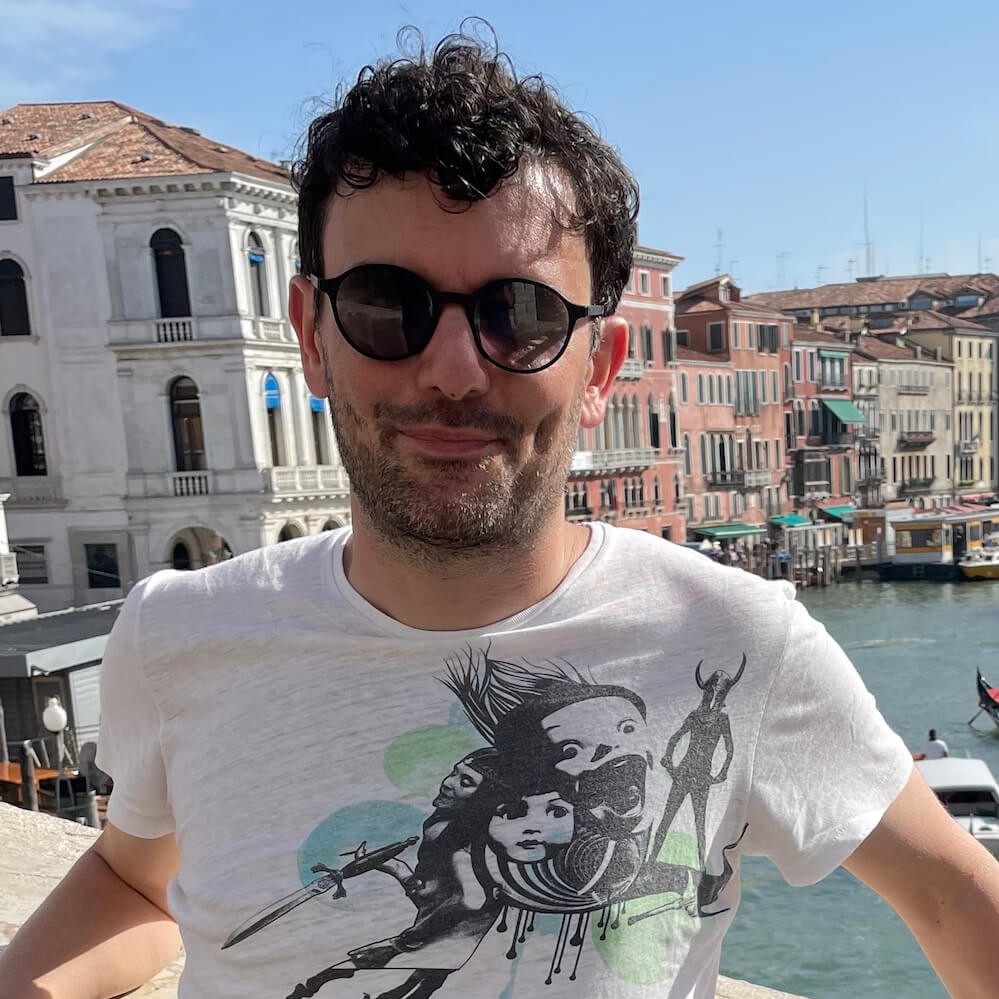
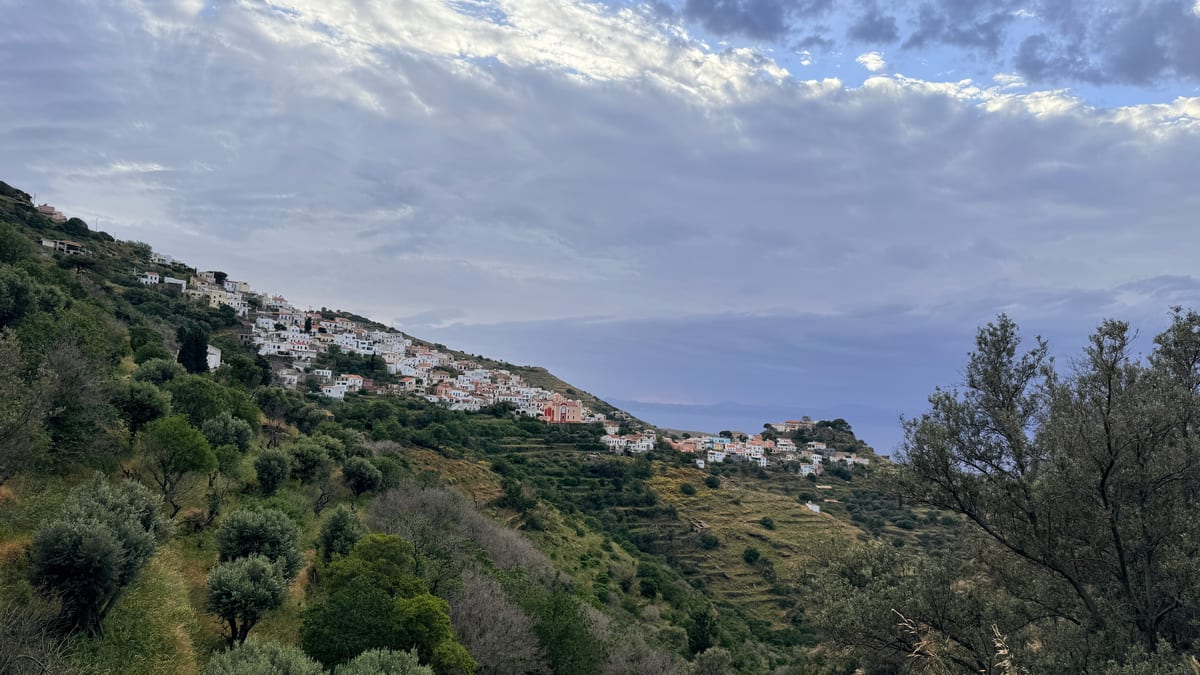
Three months ago I took the boat from Lavrio to Kea Island with a full camera kit, two colleagues, and a signed deposit in my account. Three months later, I’m still owed most of that invoice, the client has gone silent, and I’ve decided the only useful thing I can do with the experience is write it down so someone else doesn’t repeat it.
I’ve been doing video production for 20 years. Documentaries, corporate work, events, hundreds of clients. This is not my first difficult client, and it won’t be the last. But it’s the first time I did the research, saw the warning signs in writing, and still walked into it anyway. That’s the part worth talking about, more than the money.
This isn’t a story about a scam I fell for blindly. I saw most of it coming, in writing, before I got on the boat. That’s what makes it worth breaking down in detail: not as a warning about spotting red flags you’d never notice, but as an honest account of noticing them and still not adjusting my terms enough to protect the business. If you run any kind of freelance or small production outfit, first-time clients are the default, not the exception. This is what I’d do differently, and what I’d tell you to do before you’re standing on a windy island wondering when the second payment is coming.
How the Julie Meyer Booking Started
A mediator reached out through my website contact form, the same way most first-time clients find me. I get a steady stream of these, most of them legitimate, some I turn down after evaluating the brief. This one looked solid: Keanaissance 2026, a conference retreat on Kea Island, filming the sessions and editing the presentations afterward. We put together an offer, he connected me with the actual client, and we asked for the standard deposit to book tickets, equipment, crew, and hold the dates.
The client was Julie Meyer. Once I had her name, I did what I always do before committing to a project I don’t have a prior relationship for: I searched for her.
What Did the Background Check on Julie Meyer Turn Up?
She used to be a well-known name in the startup and venture world, a long career, real credibility. But starting in the mid-2010s, that reputation came apart, with reporting on fallouts, legal disputes, and allegations of fraud following her for years. None of that on its own tells you a project will go wrong. People have messy histories and still run legitimate events. But it’s information, and information is what due diligence is for.
I filed it mentally as a risk factor and moved forward anyway, because the deposit had cleared and the brief was real. That’s the part I’d change if I could rewind: knowing something and acting like you don’t know it are not the same as being cautious.
There was a smaller signal too, one that’s easy to dismiss because the money involved is trivial. The deposit landed a few euros short of the agreed amount, because it came through a different currency and a different bank, and the sender hadn’t covered the transfer fees. On its own, a five-euro shortfall means nothing. But normally, when you pay someone, you absorb the cost of moving the money yourself. You don’t pass the friction on to the other party. It’s a small thing that tells you something about how seriously the payment side of a relationship is being handled. I noted it, and I still got on the boat.
That’s the pattern I want to underline, because it’s the one most freelancers will recognize in hindsight: none of the individual signals was big enough on its own to justify walking away. A short transfer. A well-documented but not fully verified history. A promise that the remainder would be settled “on location.” Each one, taken alone, is the kind of thing you can talk yourself past, especially when you’re excited about the brief and the deposit has already cleared. It’s only when you stack them together that the picture gets clear, and by the time you’ve stacked them, you’ve often already booked the tickets.
The Deposit Question
The deposit we received covered roughly a quarter of the total project fee, not the fifty percent I’d normally want from a new client on a job of this size. I accepted the lower number partly because the mediator vouched for the relationship, and partly because accommodation and catering on the island were being handled by the client directly, which made the cash outlay on our side feel smaller than it actually was. In hindsight, that’s exactly the kind of trade-off that should have pushed me toward a higher deposit percentage, not a lower one: if a client is already offsetting some of your costs in kind, they can usually offset more of it in cash up front too.
Kea Island: Wind, Tents, and a Headline
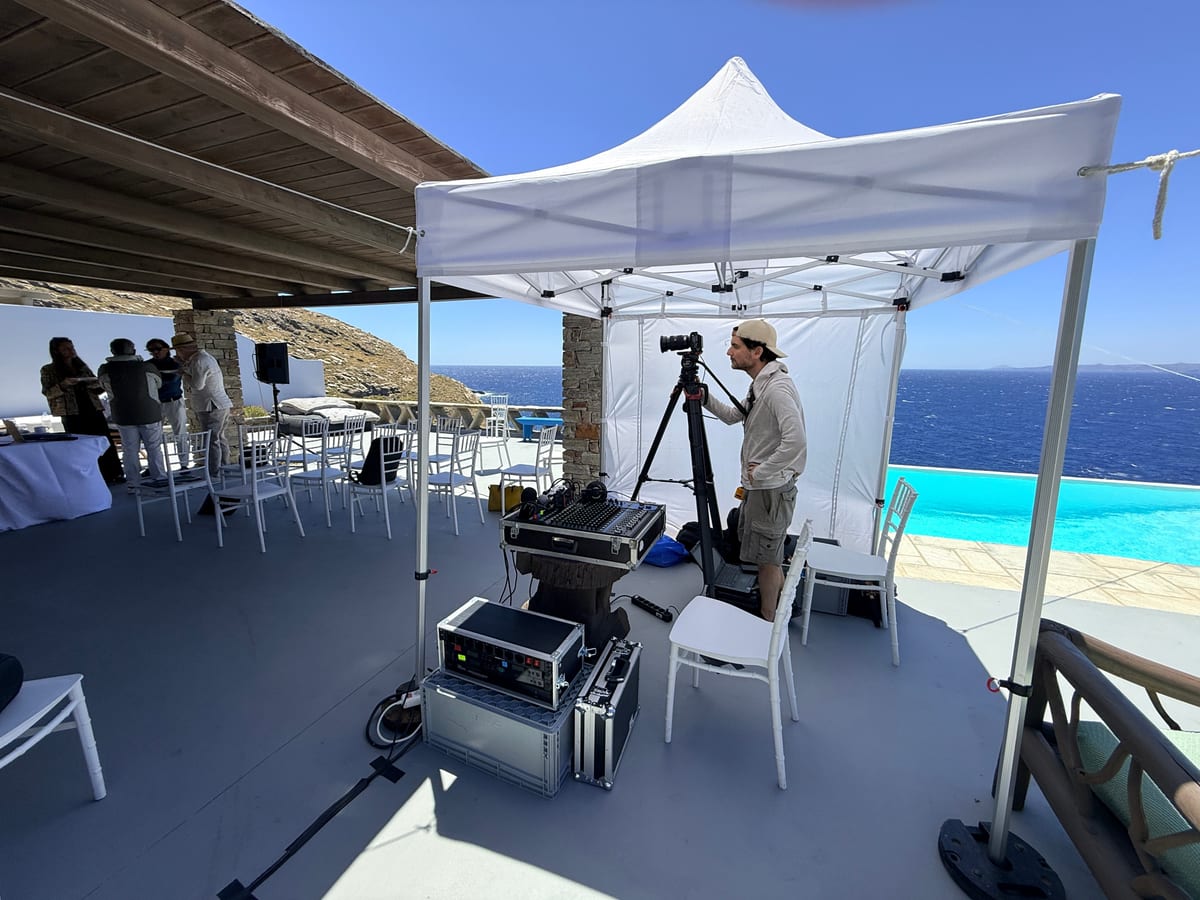
The shoot itself was hard in the way location shoots are usually hard, which is to say: physically, not administratively. The wind on the exterior of the villa was strong enough to threaten the whole exterior setup. My colleague Konstantinos, who has a gift for solving problems with his hands rather than his phone, spent as much time securing gear as filming it: retying the tent that covered our equipment station so the wind wouldn’t tear it loose, weighting down the monitor and anything else that could get knocked over or blown off a table. We adjusted, we improvised, and we delivered the shoot we were hired to deliver. That part of the job went the way it’s supposed to go.
The event itself was a retreat for startups pitching to investors, not a small gathering. Multimillion-dollar projects, serious people in the room, real money on the table for the founders presenting. That context matters, because it’s part of why I assumed payment wouldn’t be the problem. This wasn’t a shoestring operation on paper. When the room is full of people talking about seven-figure raises, it’s easy to assume the production budget for filming the thing is the least of anyone’s worries. That assumption is exactly the trap: the scale of the event around you tells you nothing reliable about whether the person who hired you intends to pay the invoice.
On the last day of filming, another attendee, someone clearly unhappy with how the event had gone for them, mentioned that a new article about Julie Meyer had just come out. I looked it up between setups. It was in The Guardian, detailing unpaid bills, missing funds, and a career built and then unwound in public. That attendee wasn’t happy either, they’d paid a significant amount to be there and felt the event hadn’t delivered what was promised to them. We finished the shoot. I filed the article in the back of my mind, the way you do when you’re still hoping you’re the exception.
Did the Invoice Ever Get Paid?
Before we left the island, I raised the outstanding balance. The answer was that the rest would be settled once everyone was back in Athens. Reasonable enough on its face. Looking back, that’s probably the moment I should have held firmer, insisted on resolving it on-site, while there was still leverage in being physically present with the footage.
Back in Athens, the replies slowed to nothing, then to the same generic line every time I followed up: apologies, some problems on their end, they’d be in touch soon. Weeks passed. I was still asked to send a specific presentation file to Julie’s partner, who needed it for a talk in China. I said the same thing every time: as soon as payment clears, the material goes out immediately. I never got a response to that, either an acknowledgment or an argument. Just nothing. I can’t tell if that was a last attempt to get something for free, or simple avoidance. Either way, the material stayed with me.
Holding back that presentation file was one of the harder moments in the whole project, not because the decision itself was difficult, but because someone on the other end genuinely needed it for a talk on the other side of the world, and withholding it felt, for a moment, like it was punishing the wrong person. That’s the uncomfortable part nobody tells you about this kind of standoff: the person chasing the deliverable often isn’t the person who owes you the money, and it’s easy to let that sympathy talk you into handing something over you shouldn’t. I didn’t, and I’d make the same call again. A firm reply can’t pay you. Withholding the material is the only leverage that actually exists once a client stops responding, and it only works if you actually use it, every time, without exceptions for who’s asking.
The rights to that footage remain mine until I'm paid in full, and nothing was ever delivered.
That’s the one piece of leverage a video production business actually has in this situation: the deposit buys nothing on its own if the finished material never leaves your hands. Technically, the client paid a deposit and received no content of any kind in return. Meanwhile, after covering the sound recordist and the rest of the on-site expenses, we ended up carrying a real loss on the project, on top of the unpaid balance.
Three months later, there’s still no reply. No payment. No footage delivered on either side.
What I’d Do Differently
If I could redo the terms of this project, the change is simple: a higher deposit, paid in full, before travel, not a partial amount with a promise to true it up on location. And full compensation before any final delivery, no exceptions. Those two changes alone would have either surfaced the risk earlier, before I’d already committed tickets and crew time, or protected the downside if it played out the same way anyway.
I haven’t spoken to the mediator since. I learned he’d stopped working with Julie Meyer even before we traveled, which tells you something on its own: the relationship hadn’t worked out for him either, and that context arrived after the booking, not before it.
How to Screen a Client Before You Say Yes
None of this is unique to video production. Anyone doing project-based creative or freelance work runs into some version of it eventually. But there are concrete things you can do to lower the odds, and I didn’t do enough of them here even though I had the information in front of me.
Screen your clients. Demand payment in advance. Withhold deliveries until you're paid. Pursue legal action if it comes to that.
Search before you commit, and actually weigh what you find. If the research turns up fraud allegations, legal disputes, or a pattern of unpaid vendors, that’s not background noise, it’s the single most useful piece of information you’ll get before signing anything. Either walk away, or restructure the terms so the risk sits with you as little as possible.
Get paid in full, or close to it, before the work happens. A 50% deposit is common in the industry, but for a first-time client with any visible red flags, I’d push that much higher, ideally the full amount, before travel or equipment costs are committed. If a client won’t agree to that, that reluctance is itself information.
Refuse to shoot until the money has actually landed. Not “it’s on the way,” not “we’ll sort it out once we’re together.” In your account, confirmed, before the gear comes out of the case. That’s uncomfortable to enforce when you’re standing on location with a crew and a schedule, but it’s a lot less uncomfortable than what comes after. I understand exactly why this is hard to hold to in the moment: you’ve already flown out, the client is friendly in person, everyone wants the shoot to happen, and refusing to unpack a camera bag over an unpaid installment feels disproportionate to the atmosphere in the room. It isn’t. The moment you’re on location with your gear is the moment you have the least leverage you’ll ever have again on that invoice, because once the material exists, the incentive to pay you drops sharply for anyone not planning to.
Listen when people around the client are dropping warnings. If you hear from mediators, past collaborators, or other attendees at an event that someone isn’t reliable with payment, that’s not gossip you can afford to file away and forget. Treat it as a live signal and adjust your terms accordingly, even mid-project if you have to.
Never deliver the final product before you’re paid in full. This is the one piece of protection you always have, regardless of what happens with the money. Withhold delivery. The client can pay a deposit and receive nothing in return if the work never gets handed over, which is exactly where this project ended: no footage delivered, no presentation sent, no material of any kind released.
Sign a contract, even when it feels like overkill for the size of the job. It’s tempting to skip the paperwork on a smaller project because it feels like friction for both sides. But a contract is the one thing that gives you a real basis for legal action later, and without one, pursuing a client internationally becomes a much harder path than it needs to be.
Consider legal action when the terms support it. We’re still weighing this option. It’s more complicated when the client isn’t a national or resident of your own country, but it’s not automatically off the table. Document everything, keep every message, and treat the paper trail as an asset from day one, not an afterthought.
Why Do People Keep Trusting a Client With a Documented History?
Here’s the part I keep turning over. How does someone with a documented history of unpaid bills, legal battles, and public reporting on fraud allegations keep finding people willing to trust her with their business ideas, their money, their time? I don’t have a clean answer. Reputation apparently doesn’t travel as fast or as far as we assume it does, especially across industries, countries, and the gap between “I read an article once” and “I’m being introduced to this person by someone I already trust.”
Part of it, I think, is that a mediator or an introduction carries a kind of borrowed trust that overrides whatever your own research turns up. I found the various articles coverage before I ever spoke to Julie Meyer directly. But the introduction came through a mediator I’d never worked with before either, one who came across as professional and legitimate from the first message, and that impression did more to reassure me than a news article did to warn me. That’s worth sitting with if you run any kind of client-facing business: a warm introduction isn’t verification, it’s just a different kind of risk, dressed up as reassurance. The mediator himself, as it turned out, had already had his own falling-out with her, information that would have changed my calculus entirely if I’d had it before the deposit cleared instead of after.
Writing this isn’t really about one unpaid invoice. It’s a small loss in the scope of twenty years of production work, and it won’t be the one that defines the business. But if this account helps one other video production freelancer, editor, or small crew catch the same signals earlier than I did, and either walk away or set harder terms before the deposit clears, it’s done its job.
I also don’t want to end on the money, because that’s not actually the whole story. I met genuinely interesting people at that event, people I’m glad I had the chance to talk to, even inside a project that fell apart financially. That’s worth remembering too. Not every unfortunate project is a total loss, and not every difficult client defines the work around them. Would I take on another high-profile event booking with a first-time, unverified client again? Yes, as long as payment terms are secured up front and expenses are covered before the shoot, not after it. That’s the whole lesson, really: prepare for the wind, and prepare for the invoice.
If you’re weighing a similar booking and want a second opinion on how to structure the terms before you commit, that’s exactly the kind of conversation worth having early. Feel free to reach out before you sign anything, or take a look at how I typically scope video production projects to see where deposit and delivery terms usually sit.