Last week, YouTube CEO Neal Mohan made “managing AI slop” one of the platform’s top priorities for 2026.
Let that sink in for a moment. The head of the world’s largest video platform isn’t announcing exciting new AI features. He’s announcing a crackdown on AI-generated garbage.
Something has shifted. And if you’re a creator who’s been feeling overwhelmed by AI’s march forward, this shift might be the best news you’ve heard in years.
The Numbers Nobody’s Talking About
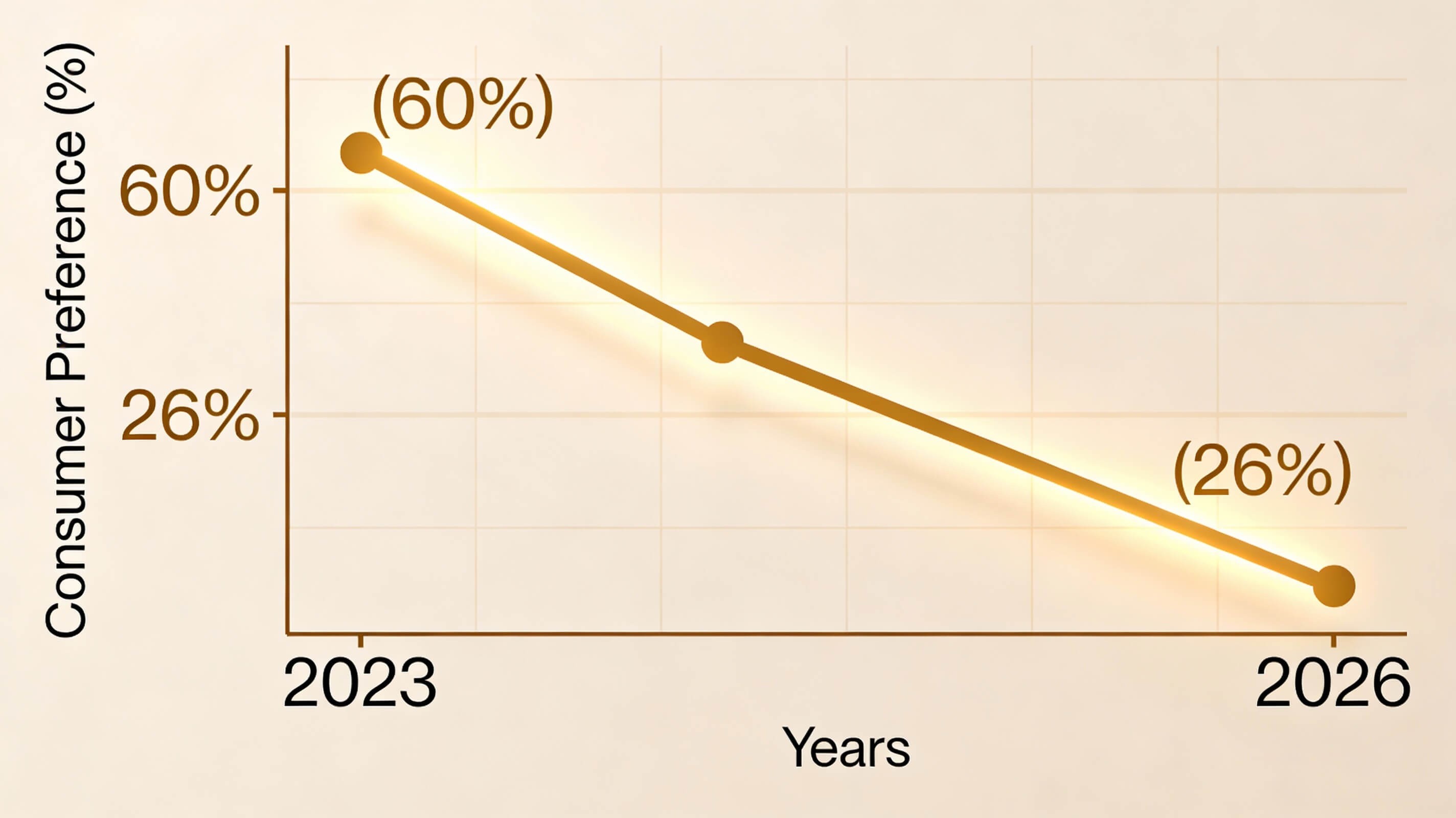
Here’s a statistic that caught my attention: only 26% of consumers now prefer AI-generated content over traditional creator content.
That number was 60% in 2023.
Let me say that again. In just two years, preference for AI content has dropped by more than half. While everyone was busy predicting that AI would take over creative work, audiences quietly decided they didn’t actually want that.
A landmark study published by Kapwing found that “AI Slop” now accounts for 21% of recommendations served to new users on YouTube. The most successful AI slop channel globally has racked up over 2 billion views. Just 278 channels exclusively uploading AI-generated content have collectively drawn 63 billion views.
The machine is producing. But is anyone actually watching?
“Slop” was named Merriam-Webster’s word of the year for 2025. They defined it as low-quality digital content mass-produced by AI. The fact that we needed a word for this tells you everything about where we are.
Why Perfect Is Suddenly Boring
I’ve been making videos for twenty years. In that time, I’ve watched the definition of “quality” change repeatedly. First it was SD. Then HD. Then 4K. Then cinematic color grading. Then professional audio. Each time, the bar got higher.
Now something strange is happening. The bar is moving sideways.
MANA Talent Group co-founder Zach Russell put it well: audiences “walk away feeling ungratified” after watching AI slop content. They can’t always articulate why. The video looks professional. The voice sounds human. The editing is clean. But something is missing.
That something is you.
According to Digiday, creators’ authenticity and “messiness” are now in high demand. The algorithm-optimized, perfectly smooth content that dominated the last few years is losing ground to creators who show up imperfect, inconsistent, and undeniably human.
This is the paradox. We spent years trying to make content that looks machine-made. Now that machines can actually make it, audiences want the opposite. We always want what we don’t have right?
What YouTube Is Actually Doing About It
YouTube’s response to this has been more aggressive than I expected.
Under the new 2026 AI transparency rules, any realistic AI-generated content must be labeled. Failure to disclose “altered or synthetic” content now results in permanent demonetization. Not a warning. Not a strike. Permanent.
They’ve also updated their creator policies to more broadly cover “inauthentic content” such as repetitive uploads of slideshows with similar narrations. The platform is specifically targeting the assembly-line approach to content creation.
But here’s the interesting part: YouTube isn’t banning AI. They’re banning low-effort AI. They’re still rolling out AI creation tools for creators. More than 1 million channels used YouTube’s AI tools daily in December 2025.
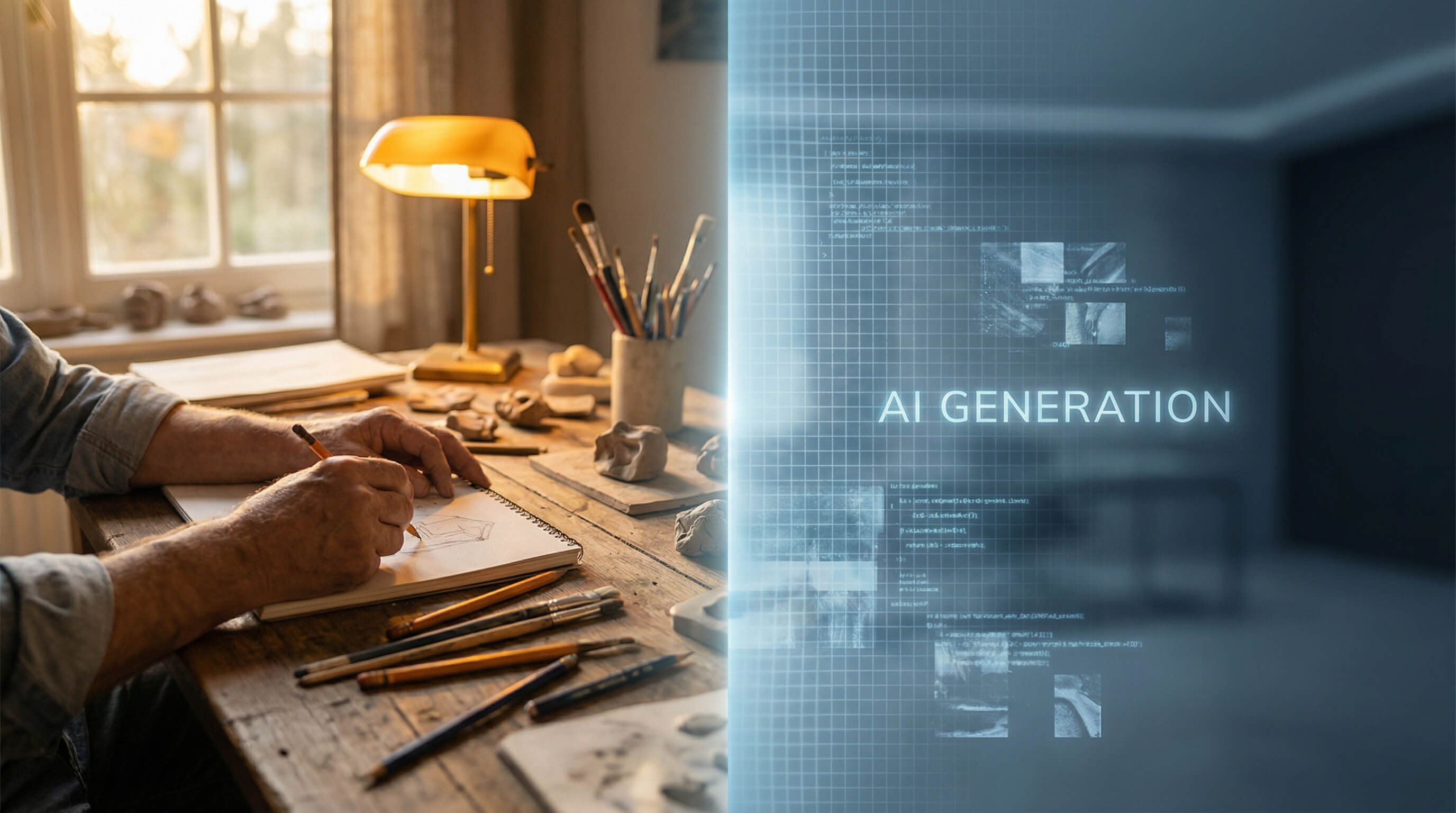
The distinction matters. Using AI as a tool to enhance your work is encouraged. Using AI to replace your creative input entirely is getting punished.
The Authenticity Advantage
So what does this mean for you?
If you’re a creator who has been feeling left behind by AI, you might actually be ahead. Your human perspective, your unique voice, your willingness to show the messy process - these aren’t weaknesses anymore. They’re differentiators.
Here’s what I’ve learned from twenty years of making documentaries, and more recently from building TAGiT, my AI-powered learning tool:
AI is best when invisible. In my video work, I use AI for research, fact-checking, subtitle generation, and workflow automation. Transcripts, translations, audio mixing etc. The AI handles the tedious parts so I can focus on the parts that require human judgment.
Authenticity will always win. I stopped worrying about having the perfect setup for every shot. Audiences often trust content more when it looks like it was made by a real person in a real situation.
Your experience is unfakeable. AI can generate text about filmmaking. It can describe what it feels like to direct a video. It cannot feel the weight of a story you’re responsible for telling. That lived experience comes through in ways that are hard to articulate but easy to sense. At least to this date.
The Creators Who Will Thrive
Looking at what’s happening, I see three types of creators emerging:
The AI-augmented human. Uses AI tools extensively but keeps creative decisions human. The AI handles research, transcription, basic editing suggestions, image generation for concepts. The human handles story, voice, and final judgment. This is where I operate.
The anti-AI purist. Actively avoids AI tools and markets that distinction. There’s a growing audience for “handmade” content, similar to the craft movement in physical products. This works, but limits your output.
The slop factory. Automates everything, publishes constantly, optimizes for algorithm signals. This worked in 2024. In 2026, platforms are actively suppressing it. In 2028 nobody knows.
The Real Question
Here’s what I keep coming back to: Why did we assume audiences wanted AI content in the first place?
The promise of AI in creative work was always about efficiency. Make more content faster. But efficiency isn’t what audiences are optimizing for. They’re optimizing for connection, for learning, for entertainment, for feeling something.
AI is really good at production. It’s less good at making you feel something genuine.
There’s a reason documentary filmmaking, which I’ve spent my career in, relies so heavily on real people telling real stories. You can’t fake the moment when someone’s voice breaks because they’re remembering something that mattered. You can’t generate the awkward pause where someone decides whether to tell you the truth.
Those moments are what make content worth watching. And those moments are stubbornly, persistently human.
The Optimistic View
I know a lot of creators feel threatened by AI. And that fear is understandable. The technology is genuinely impressive and improving rapidly. In fact most industries are feeling threatened and righteously so.
But the data is pointing somewhere unexpected. Audiences aren’t racing toward AI content. They’re backing away from it. The platforms aren’t celebrating the AI content flood. They’re building tools to contain it.
Your human imperfections - the awkward pauses, the authentic reactions, the lived experience, the unique perspective - these aren’t bugs in your content. They’re features. Features that AI cannot replicate and audiences increasingly value.
The AI slop paradox is this: The better AI gets at making content, the more valuable truly human content becomes.
That’s not a bad position to be in.
What’s your experience with AI content as a creator or consumer? Have you noticed this shift? Drop me a line at the contact page or find me on socials.
Sources: